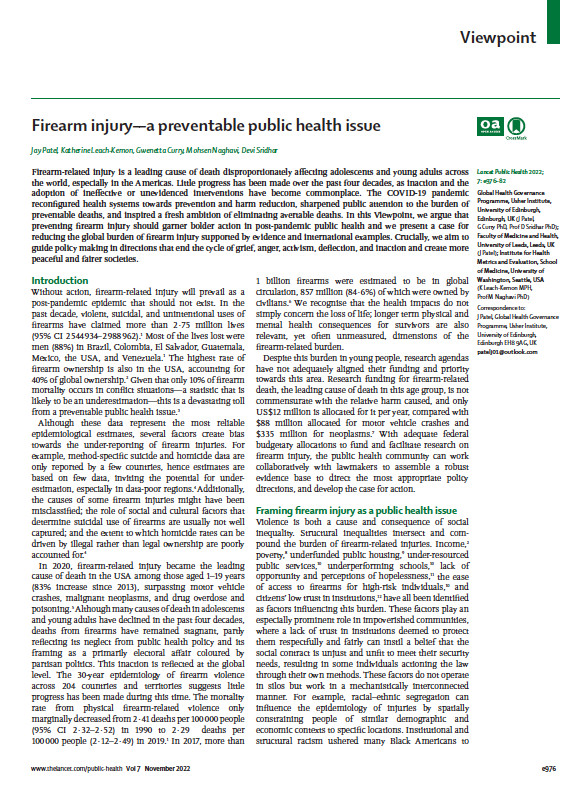
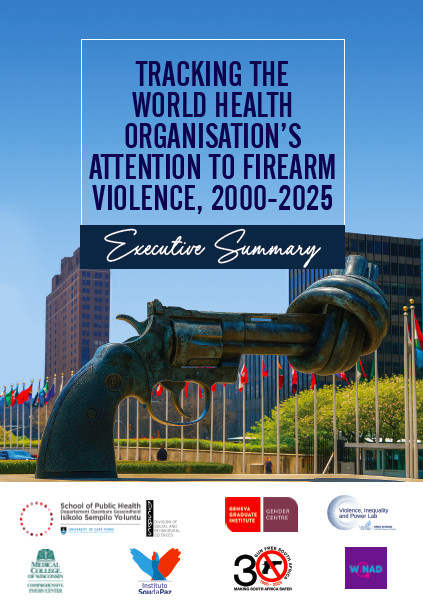
This article frames firearm injury as a largely preventable global public health crisis that disproportionately affects adolescents and young adults, particularly in the Americas, and has been sustained by decades of political inaction and insufficient evidence-based policy.
Drawing on global epidemiological data, the authors show that firearm mortality is shaped by structural inequalities, access to firearms, alcohol use, and intimate partner violence, and that comprehensive policy packages—especially background checks, licensing, and limits on access—are among the most effective prevention tools. They argue that escaping the recurring cycle of outrage and inaction will require coordinated, cross-sector public health leadership and alignment with global development goals aimed at reducing violence and promoting equity.