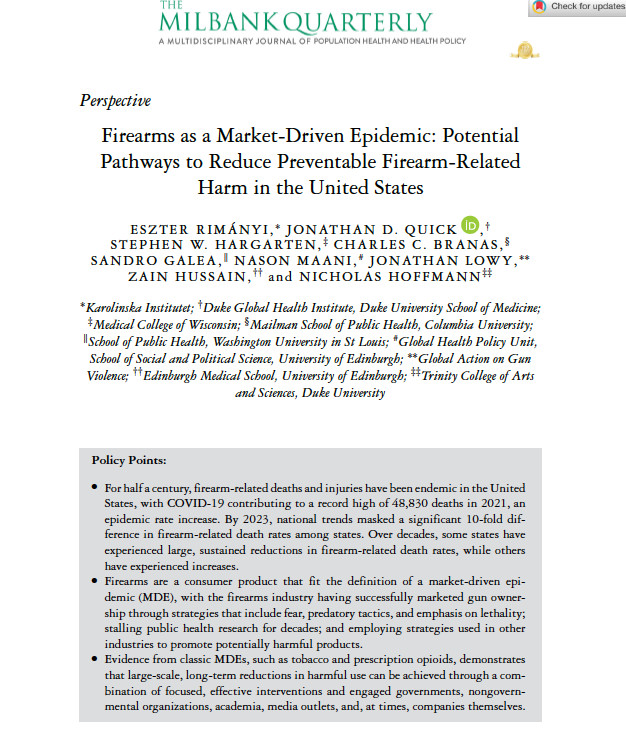
This Milbank Quarterly perspective argues that US firearm-related death and injury constitute a “market-driven epidemic” (MDE), paralleling tobacco, sugar, and prescription opioids. Using a five-phase framework—market development, evidence of harm, corporate resistance, mitigation, and market adaptation—the authors trace how marketing shifted from hunting/sportsmanship toward self-defense and fear-based appeals, while industry resistance (Dickey Amendment, liability shields) stalled research and regulation. Despite this, evidence-based interventions (background checks, waiting periods, red flag laws, community violence programs) have produced sustained reductions in firearm deaths in states like California and New York, contrasting with rising rates in permissive states like Mississippi and Missouri, suggesting substantial harm reduction remains achievable.